PoCats
Every cat becomes a collectible card
Cut from your own photograph. No two cards in your album are the same colour, because each cat prints its own.
Catch a cat in PoCats and it joins your collection as a trading card: the animal lifted out of your photo, a rarity, a serial number and the place you met it. The album is where the collection lives, and nothing in it can be bought.
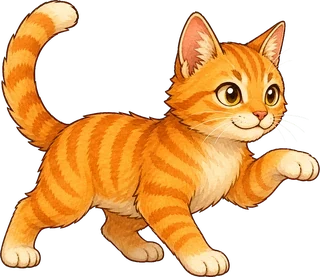
The cat on the card is not generated. It is the photograph you took with the background taken away, so the animal on the card is the animal you stood in front of, down to the notch in its ear. A model checks it is a live cat and a background remover cuts it out. Neither one draws it.
What is printed on a card
- The window. Your cat, cut out of your photograph, on a wash mixed from its own colouring. A ginger prints warm, a black cat prints cool, and no two cards in an album match.
- The field marks. What the scan read off the cat, printed as chips: the coat, the fluff, the build and what it was doing when you found it.
- The title. Earned, not chosen. Park Strategist, Kerb Regular, Knot Examiner.
- The name. Given by the game and changed by you, whenever you like.
- The flavour line. One sentence about how it was behaving when you met it.
- The stamp. CAUGHT IRL. It cannot be bought, traded or faked, because the only way to print it is to have stood in front of the animal.
- Three stats. Chonk, Floof and Zoomies, out of five. They are a character sketch, not a power level.
- The foot. The finish, the word POCATS, and the serial number of that card in your album.
- The back. Gold on brown leather, identical on every card, because that is what makes a stack read as a stack.
Finishes
Rarer cats print on better stock. A standard card is flat. A reverse holo puts the foil across the card body and leaves the photograph clean. A holo pools the foil in the window, over the cat. The sweep is not a static gradient: it travels, and it travels faster when you move the phone.
The album
One continuous grid of cards on a wooden table. Sort by newest, oldest, rarest or name. Filter to the rare ones or the ones you have marked as loved. Tap a card to see it full size, turn it over, rename it, or let it go if the cutout came out wrong.
Photographs are sent to the verification service to confirm a live cat and to cut it from the background. They are never posted publicly and never shown to other players. What leaves your phone deliberately is the share card, and only when you tap share.
Meeting a cat twice
Catch a cat near one you already have, and PoCats asks whether it is the same animal instead of deciding for you. Say yes and the sighting joins that cat's record, with a count of how many times you have met. The regulars on your street become the ones with a history.
What decides a card’s rarity?
How close to the centre of the window you released, how confident the scan was about the cat, and whether you were standing somewhere you had caught a cat before. Nothing you can buy affects it.
Can I rename a cat?
Yes. Every card can be renamed whenever you like, and the name you give it is the one on the card and in the share image.
What is a foil card?
Rarer cats print with a foil finish: a band of colour that sweeps across the card as it moves. Reverse holo puts the foil on the card body and leaves the photograph clean; holo pools it in the window with the cat.
Do I lose my cards if I stop playing?
No. Cards stay in your album whether or not you ever pay for anything, and they are never held behind a subscription.
Your album starts with one cat
The first card is the hard one. After that you will start noticing cats you walked past for years.